
Research, innovation, and technology are strategic drivers of economic growth and societal progress. As Greece seeks to strengthen its position within the global knowledge economy, it must successfully translate high-quality research and scientific knowledge into real-world applications and commercial opportunities.
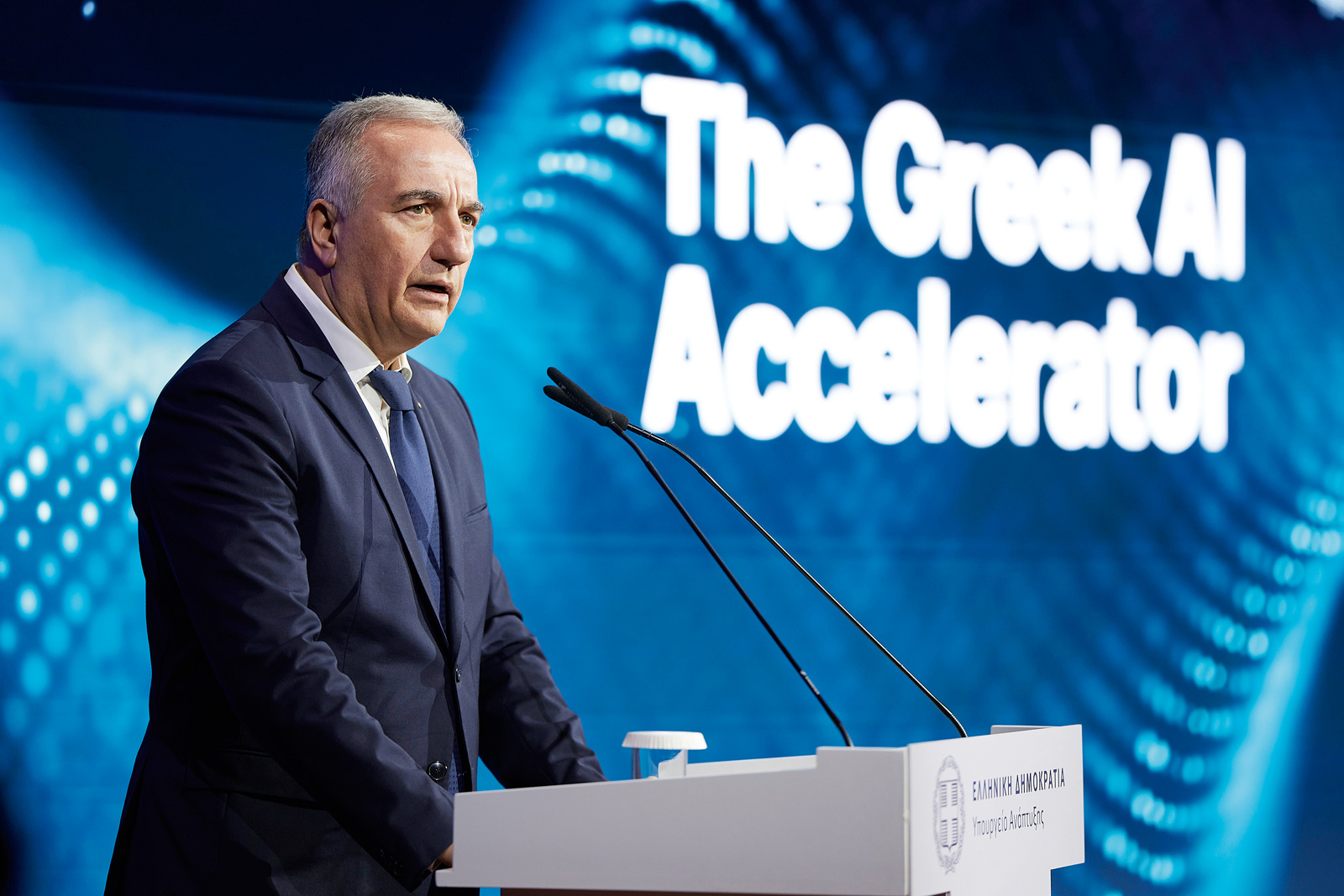
Here, Stavros Kalafatis, Deputy Minister for Development Responsible for Research and Innovation, discusses government efforts to strengthen the country’s innovation ecosystem and create the conditions for knowledge to generate tangible economic and social value.
Greece has made notable progress in research performance over the past decade, yet commercialization remains a challenge. What can be done to ensure that innovation generates greater economic and societal impact?
Greece achieves outstanding performance in scientific research, proving that investing in research pays off. From 2018 to 2024, Greece’s R&D expenditures increased from €2.2 billion to €3.7 billion, strengthening our capacity with 20,000 new high-specialization jobs. The major challenge now is to convert this knowledge into marketable high-value-added products and services, cultivating a horizontal culture of innovation that allows our youth to create here, in their own country.
To bridge this gap, we are moving along three main pillars:
Research – Innovate 2021–2027, our €300 million flagship initiative, funds partnerships between businesses and research organizations. It focuses primarily on the commercialization of research results, as per Intervention III of the initiative, providing the necessary working capital to bring a patent from the laboratory to the market.
Technology Transfer Offices (TTOs) have been established in universities and research centers to support researchers in patenting and commercially exploiting their work through existing companies or spin-offs. Concurrently, shared structures, such as incubators and accelerators, are being developed to turn ideas into startups.
Lastly, Greece’s Smart Specialization Strategy (RIS3) for 2021–2027 uses an entrepreneurial discovery process to focus on eight critical sectors with a competitive advantage (such as agrifood, environment, digital economy, materials/construction), ensuring that produced research addresses real market needs.
Our central priority at the Ministry of Development is to shape a new knowledge-based production model, enabling Greece to play a leading role in the era of artificial intelligence and emerging technologies. We bring the world of science closer to the market through joint projects, institutions, and incentives. In this way, knowledge born in Greek laboratories is transformed into tangible innovative products, benefiting both the economy and society as a whole.
How do the government’s regional innovation hubs promote innovation and growth across the country?
We have drafted and put into effect a specific strategy regarding the creation of 13 Regional Innovation Hubs, local growth poles developed in cooperation with the respective administrative regions, with a core focus on new technologies. Our goal is to better coordinate and interconnect regional innovation ecosystems across the country, creating synergies between scientific and academic institutions, research centers, and businesses.
The philosophy behind these hubs is based on the decentralization of innovation: They create local synergy, bringing local universities, research institutes, productive enterprises, and local government together at the same table. They highlight local advantages, with each hub specializing in the needs of its region; for example, in Crete or Western Greece, the focus is on agrotech and energy, while in Northern Greece, we leverage the dynamics of institutions like CERTH (Centre for Research and Technology Hellas) to develop practical solutions such as smart urban mobility management. Crucially, they also support talent retention (brain gain), ensuring that young scientists and entrepreneurs do not need to relocate to Athens or move abroad to access high-level infrastructure. By investing in human capital across Greece, we are enhancing regional competitiveness and creating highly specialized jobs.
We want the Regional Innovation Hubs to act as catalysts for development, reducing regional disparities and fostering the growth of local communities. For our government, investing in research and innovation is a strategic choice that is central to Prime Minister Kyriakos Mitsotakis’s policy agenda for a new, socially, economically, and environmentally sustainable development model. Innovation everywhere means prosperity for all.
What tools are available to help startups and innovative SMEs access funding, technology, research expertise, and growth opportunities, particularly outside the major urban centers?
Startups and SMEs are key catalysts for changing our production model. The Elevate Greece platform offers a mature ecosystem that provides targeted angel investor tax incentives and facilitates access to venture capital. Meanwhile, a suite of tools is being implemented to boost innovation throughout Greece.
Regional startups and SMEs can use innovation vouchers to purchase research services from universities and research centers to improve their products.
The Hellenic Development Bank of Investments (HDBI) is channeling liquidity to the regions through new co-financed venture capital funds. This is the foundation for EquiFund II, a new national fund-of-funds backed by EU structural funds and national resources to develop the domestic venture capital and private equity ecosystem to finance innovative projects. Beyond capital, however, corporate culture is also shifting.
With the new Development Law and the super-deduction of R&D expenses reaching 315%, investment in research is transformed into an absolute prerequisite for growth, positioning Greece as an important innovation hub in Southeast Europe. Finally, the 13 new Regional Innovation Hubs serve as physical incubators and co-working spaces, directly connecting regional startups with international markets and major industries.
These tools serve as a lever to shift business culture and significantly improve the landscape for companies investing in innovation.
How can AI contribute to economic growth and public-sector modernization and what are the government’s priorities in this area?
Our strategy for AI constitutes a structural driver for the transformation of the Greek economy and daily life. Greece, as one of the first countries with a national strategy aligned with the European AI Act, mobilizes its top scientific talent through eight Sectoral Scientific Councils (SSC) of the National Council for Research, Technology, and Innovation (NCRI).
National priorities focus on five main axes:
High-performance national infrastructure – A top priority is the completion of the Daedalus supercomputer, the heart of the Pharos AI factory, which establishes Greece as a technological hub in Southeast Europe. This investment is complemented by the creation of the new national AI infrastructure in Kozani and CERTH’s new AI Nucleus research center in Thessaloniki, turning the country into a regional data hub.
Bridging research and the market – We interconnect research centers such as CERTH with local entities, municipalities, and chambers of commerce so that applied AI research directly solves daily problems faced by SMEs.
Regulatory control and safety – Through the Special Secretariat for Artificial Intelligence and Data Governance, we ensure the ethical development of technology with absolute respect for personal data.
Public sector modernization – We integrate AI tools to reduce bureaucracy, ensure faster citizen service, and analyze data in healthcare and civil protection, such as for the early prediction of natural disasters.
Boosting entrepreneurship – In cooperation with bodies such as SEV, the Hellenic Federation of Enterprises, we help businesses integrate AI, targeting a 15–20% increase in their productivity and an enhancement of their international competitiveness.
These upgrades to the national innovation ecosystem are reflected in the trust shown by global tech giants such as Google, OpenAI, and Mistral AI, validating our domestic talent and infrastructure.
AI serves as a strategic tool for social and economic cohesion across Greece’s regions. After all, in 2025, Greece ranked first in the EU in the use of AI tools by young people (83.5%), proving that our human capital is our strongest asset for the future. Our country is not merely observing developments; we are actively co-shaping them.
With €300 million in RRF funding allocated to upgrading research infrastructure, how will these investments transform Greece’s research capabilities, boost international competitiveness, and attract talent and investment?
The allocation of resources exceeding €300 million from the Recovery and Resilience Facility to upgrade the country’s research infrastructure represents a historic opportunity, marking the largest injection of public investment into research in recent decades.
The expected results are tangible, beginning with infrastructural and technological modernization that will see the country’s 11 major research centers (including CERTH, Demokritos, FORTH, the National Hellenic Research Foundation, and Athena Research Center) acquire world-class laboratories, cutting-edge scientific equipment, and modern facilities.
The funding will also drive a national brain regain, attracting and retaining talent, and motivating Greek scientists to return from abroad, through a combination of competitive salaries and modern infrastructure where they can conduct cutting-edge research without obstacles. This upgraded innovation landscape is already attracting international investments, with major multinational technology companies increasingly choosing Greece to establish their regional R&D hubs, thanks to the country’s world-class ecosystem of modern infrastructure and specialized personnel.
How can the planned integration of academia, research, and innovation under one ministry help bridge the gap between academic research and market application to deliver real-world solutions and drive economic growth?
The creation of a new, unified ministry that will bring higher education, research, and innovation under one roof, as announced by Prime Minister Kyriakos Mitsotakis, will constitute a structural, institutional reform that the research community itself has been demanding for years.
The special task force established to oversee this transition—and in which I have the honor to participate—is working intensively on setting up this new entity following the elections. The objective is to unify the fragmented research space under a common structure that will allow universities and research centers to connect directly with the economy, thereby boosting the country’s international competitiveness.
By eliminating the silos between higher education institutions and research centers, we are creating a common research fabric aligned with European and international best practices. This administrative unification will enable the formulation of a single, coherent national strategy for research, accelerating program calls and reducing the structural bottlenecks that used to delay the absorption of funds.