

From pedagogical innovations to evidence-based curricular reform, Fulbright alumna Dr. Aigly Zafeirakou has dedicated her career to improving foundational learning in countries around the world, working with leading international organizations including the OECD, UNESCO, UNICEF, as well as the Gates Foundation and the World Bank, for which she currently consults as a Senior Technical Advisor. Business partners reached out to her to discuss the effort to ensure equitable quality education, the process of translating research into effective policy, and how her experience with the Fulbright Program helped shape her impressive international career in education policy.
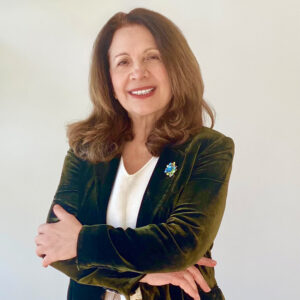 How did your experience as a Fulbright Visiting Scholar shape your perspective on the role of early childhood education in social and economic development?
My Fulbright fellowship, which I held from 1998 to 1999 at the Department of Education in Washington DC, was pivotal to evolving my understanding of the importance of the evaluation of education policy implementation. During this period, I experienced firsthand the power of impact evaluation tools in boosting the policy of the Head Start program, which offered early childhood development services for children from vulnerable and poor families, initially in Chicago. Specifically, impact evaluation showed strong positive impacts on child and youth development, as well as better jobs for parents, especially women. In the longer term, this has driven better economic outcomes for the families in the targeted communities. My fellowship helped me to understand how the impact evaluation of programs addressing the needs of young children supports evidence-based education policy development and sustainability. A key lesson learned was that to make a difference, one must not only research, develop, and implement policies but must also evaluate the outcomes of those policies for impact. Only in this way can we drive future change sustainably.
Having worked within diverse educational systems around the world, what are some common challenges they face in ensuring quality and equity in education?
The common denominator is how to bring quality education to all students and not only to a part of the population. Quality, affordable education for their children is a demand of all parents. This is also the challenge for a country: to build the human capital, including knowledge and skills, through quality education services reaching all children.
Key common challenges for low- and middle-income countries include:
Developing a strategy and an implementation plan and measuring results; specifically, an evidence-based strategy, a realistic, costed implementation plan, and ensuring the availability of resources to deliver quality pre-primary and primary education to all students, even in hard-to-reach communities.
Ensuring teacher quality: preparing teachers to implement at the classroom level in a constantly changing education environment, particularly given the AI revolution in education, which means focusing on foundational learning while also preparing students for the AI era.
Addressing disparities caused by socioeconomic status, geographic location, and access to resources: Students from marginalized backgrounds continue to face barriers that hinder their ability to fully benefit from educational opportunities; furthermore, ensuring inclusivity for children with disabilities and those from linguistic minorities remains a persistent issue, requiring targeted policies and sustained investments.
Providing curricula adapted to 21-century needs without phasing out the foundations: Curricula development should reflect the science of learning, the science of how we teach and how we learn, which connects insights from cognitive sciences and educational psychology with the teaching practices supported by those insights.
Evaluating education reforms to improve implementation: More than ever, countries need robust technical capacity to evaluate education reforms based on measurable learning outcomes and to develop or adapt the right policies to address issues.
To make a difference, one must not only research, develop, and implement policies but must also evaluate the outcomes of those policies for impact
What has working with major international organizations taught you about translating research into effective education policy?
The first step is always to proceed with the analysis of a given problem or situation using reliable tools and robust data. This helps identify strengths and challenges. The second step is to bring in up-to-date research in order to better understand the challenges and shape the solution supported by evidence-based best practices. The outcomes from these two steps subsequently drive the development of the appropriate policies, which should be accompanied by costed implementation plans with measurable outcomes. Crucially, all processes should be owned by countries and key institutional actors. No research-based education policies can be successful if they are not fully developed by country experts and owned by all key country partners.
Looking at education in Greece, what strengths and opportunities do you see from your global vantage point, particularly in terms of supporting young learners and teachers?
The high value that Greek families give to education is a key strength. The desire for high-quality education is an opportunity to introduce policies with measurable results in terms of learning and skills. It is an avenue to develop and introduce the right policies to address the learning gap that was revealed through the national assessments and the PISA-OECD results.
Given the high demand for quality education, it is a national need to elevate the quality of all public schools in the country, from kindergartens to universities. Policies should aim to improve the performance of students in public schools with an emphasis on language, mathematics, and science—that is, where the drama of school failure is played out. Only a clear improvement in student performance will make public education more effective and more equitable, serving all families and students.
The high value that Greek families give to education is a key strength
As a Fulbright alumna and seasoned expert in education policy, what advice would you offer to young professionals aspiring to make a difference?
Young professionals aspiring to make a difference in education should seek to deeply understand the given context of a country, community, or school: What are the strengths? What are the needs? What are the challenges? They should avoid top-down solutions in favor of building or strengthening the capacity of local people and communities. They should look to support policy leadership to be able to analyze and understand by themselves the issues and to find the tailored solutions developed and implemented by themselves. This means to trust human potential and to provide guidance to fully develop it: to students, teachers, parents, and communities, as well as to policymakers and researchers. Finally, I would advise young professionals to maintain a focus on evidence, on what works based on the scientific research, while remaining grounded in humanist values and a commitment to equality of access to high quality education services.
For more information visit www.fulbright.gr