
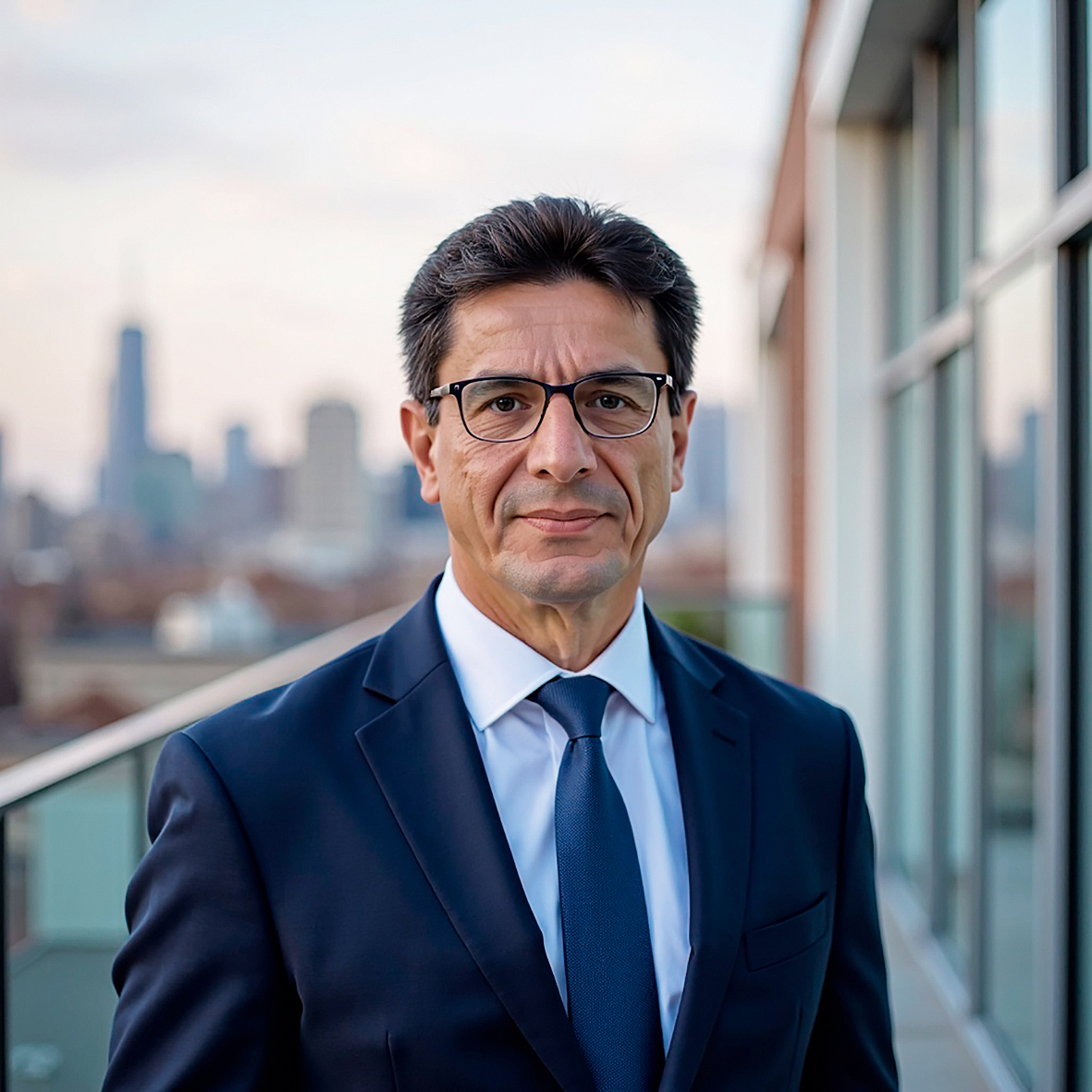
Dr. Anthony Rodolakis, Executive Director of Tax and Economic Policy at Ostroff Associates, talks to Business Partners about building strong business partnerships between Greece and the United States, the importance of ethical leadership, and the promise of AmCham Greece’s new office in Washington DC.
Tell us a bit about your work at the intersection of economics, policy, and purpose.
My professional journey has always revolved around connecting analysis to action—turning data, ideas, and most importantly, relationships into meaningful economic outcomes. As Executive Director of Tax and Economic Policy at Ostroff Associates, I help bridge the gap between government policy and private enterprise, guiding companies, nonprofits, and institutions as they navigate complex fiscal and regulatory landscapes. My perspective has been shaped by seeing both sides of the policymaking table: how legislation becomes operational reality and how data-driven strategy can foster inclusive, sustainable growth.
At its core, my professional mission is about building bridges that endure—between analysis and action, between public purpose and private initiative, and between nations that share a belief in enterprise, education, and ethical leadership. Leadership, to me, is not about hierarchy—it’s about stewardship, leading by example and never losing sight of the interests of your team. It means creating systems that outlast you, mentoring the next generation, and never losing sight of the ethical responsibility that comes with influence.
Leadership is not about hierarchy—it’s about stewardship
The challenges of our time—energy transition, digital transformation, and inclusive growth—require more than expertise; they demand trust, dialogue, and a renewed sense of common purpose. I am proud to contribute, in my small way, to that effort—helping ensure that both Greece and the United States continue to rise together.
What is the role of tax policy in bridging public policy and private enterprise?
Tax policy is not just a fiscal instrument. It is a signal of a society’s values and priorities. When designed thoughtfully, it can catalyze investment, productivity, and innovation.
During my time in New York State government, I was privileged to help advance several initiatives that exemplify this synergy. The NYS Corporate Tax Reform of 2014–15, one of the most significant overhauls in state fiscal history, supported growth and enhanced New York’s competitiveness as an innovation hub. At the same time, small-business tax incentives for manufacturers and farmers helped stimulate capital formation and job growth across upstate regions. Complementing those reforms, various tax credit programs mobilized billions in private capital, demonstrating how smart fiscal design can marry public purpose with private initiative. Each of these efforts affirmed a core belief: Economic development succeeds when the public and private sectors share accountability. Policymakers provide the framework; businesses deliver the innovation and risk-taking that bring it to life.
In my current role, I see that same dynamic unfolding internationally. Strategic, evidence-based fiscal policy can help nations attract sustainable investment and accelerate their energy and digital transitions—when trust, transparency, and longterm planning align.
In your work connecting Greek and US businesses, what have you found to be essential to effective and successful partnerships?
The Greek and US economies have complementary strengths that, when combined, create real potential for transatlantic innovation. Greece’s position as a logistics and energy hub in Southeastern Europe, anchored by world-class shipping, renewables, and infrastructure projects, intersects naturally with the US’s deep capital markets, technology expertise, and global financial networks. I’ve seen this synergy firsthand through initiatives in energy transition, shipping decarbonization, and carbon-market compliance, where analytical rigor and maritime experience come together to solve pressing global challenges.
Beyond analytics, I’ve focused on cultivating practical partnerships between Greek maritime enterprises and US companies across multiple sectors. I have been positively amazed by Greek firms’ exceptional technical depth and operational experience; US partners contribute advanced analytics, financing models, and environmental-technology knowhow. Together, they form a natural alliance, helping fleets and logistics hubs modernize, comply with evolving EU and IMO standards, and unlock new opportunities in sustainable trade.
I’m also passionate about helping young Greek startup entrepreneurs in the education space. Supporting these initiatives means empowering educators to think entrepreneurially, access investment, and scale responsibly. Education and innovation are inseparable—and Greece’s new generation of educators is proving that social purpose and economic dynamism can reinforce one another. But we need to help them. Public-private funding needs to be readily available to support those businesses in their early stages. This is a call for action for all.
Economic development succeeds when the public and private sectors share accountability
Whether in maritime services or early-childhood education, these partnerships are built on trust and longterm vision. It’s not merely about transactions—it’s about creating enduring ecosystems where expertise, capital, and credibility flow freely in both directions.
Do you have any advice for young professionals or entrepreneurs looking to navigate global markets and foster meaningful cross-border partnerships?
If there is one lesson my career has reinforced, it’s that competence and character must grow in parallel. To young professionals navigating global markets, I would say: Develop a discipline of curiosity. Learn to read not just numbers, but people, cultures, and institutions. Adaptability and cultural intelligence are your greatest assets—but just as important is moral clarity. The modern economy rewards speed, but true leadership requires patience, empathy, and integrity. Your reputation is your most durable currency. Whether you are negotiating a policy reform, leading a team, or launching a venture, never sacrifice principle for expedience. Leadership is a daily practice of consistency: showing up prepared, owning your decisions, and respecting those whose perspectives differ from yours.
And of course, always strive to learn and to grow. Even after decades in policy and economics, I’m currently pursuing an MBA with Shipping Management—because growth never stops. Humility and discipline are not opposites; they are the twin engines of progress.
As a member of AmCham Greece – USA, what does the new Washington office represent to you, and how do you see its role moving forward?
The creation of the AmCham Greece office in Washington is more than an institutional milestone; it’s a strategic opportunity. For the first time, there’s a continuous channel connecting the policymaking heart of the United States with the entrepreneurial pulse of Greece.
As a member of AmCham Greece – USA, I see this office as a gateway for concrete collaboration: pairing US investors with Greek innovators, linking state-level economic-development agencies with Greek ministries and regional clusters, fostering joint dialogues on energy transition, technology, and education, and organizing summits where policy makers and innovators can collaborate and coordinate meaningful investments that lead to sustainable growth.
It can also play a vital cultural role, showcasing how shared democratic values and transatlantic friendship translate into modern economic partnerships. In an era of geopolitical uncertainty, deepening the US–Greece commercial and policy bond sends a powerful message of stability, openness, and mutual progress.