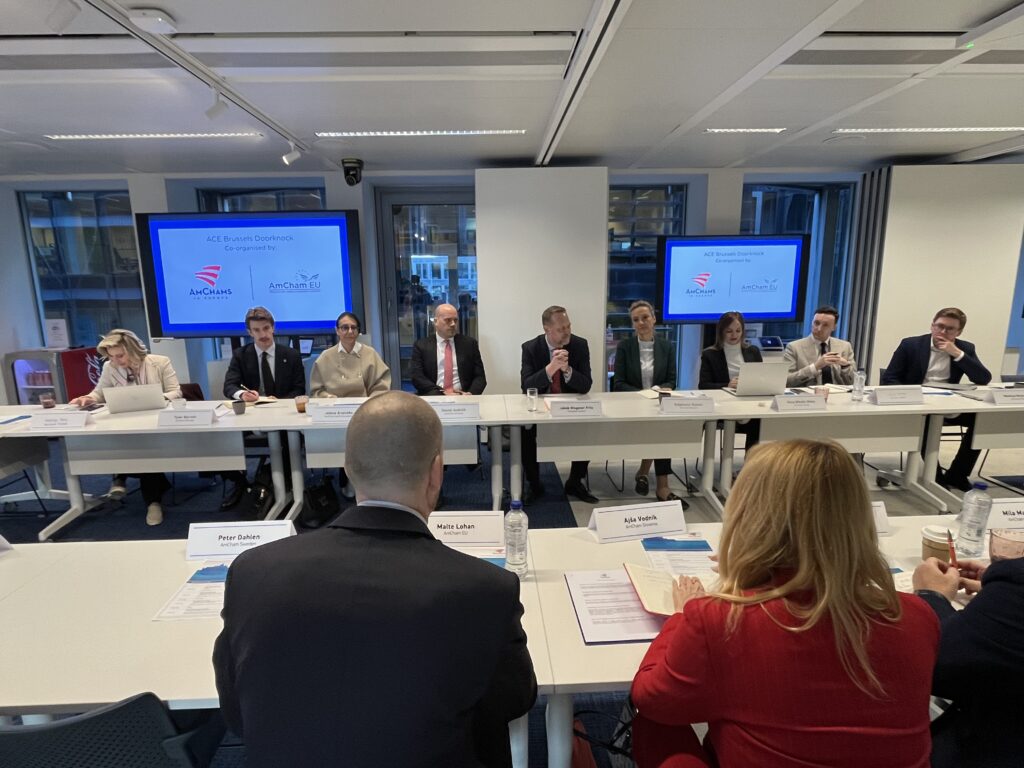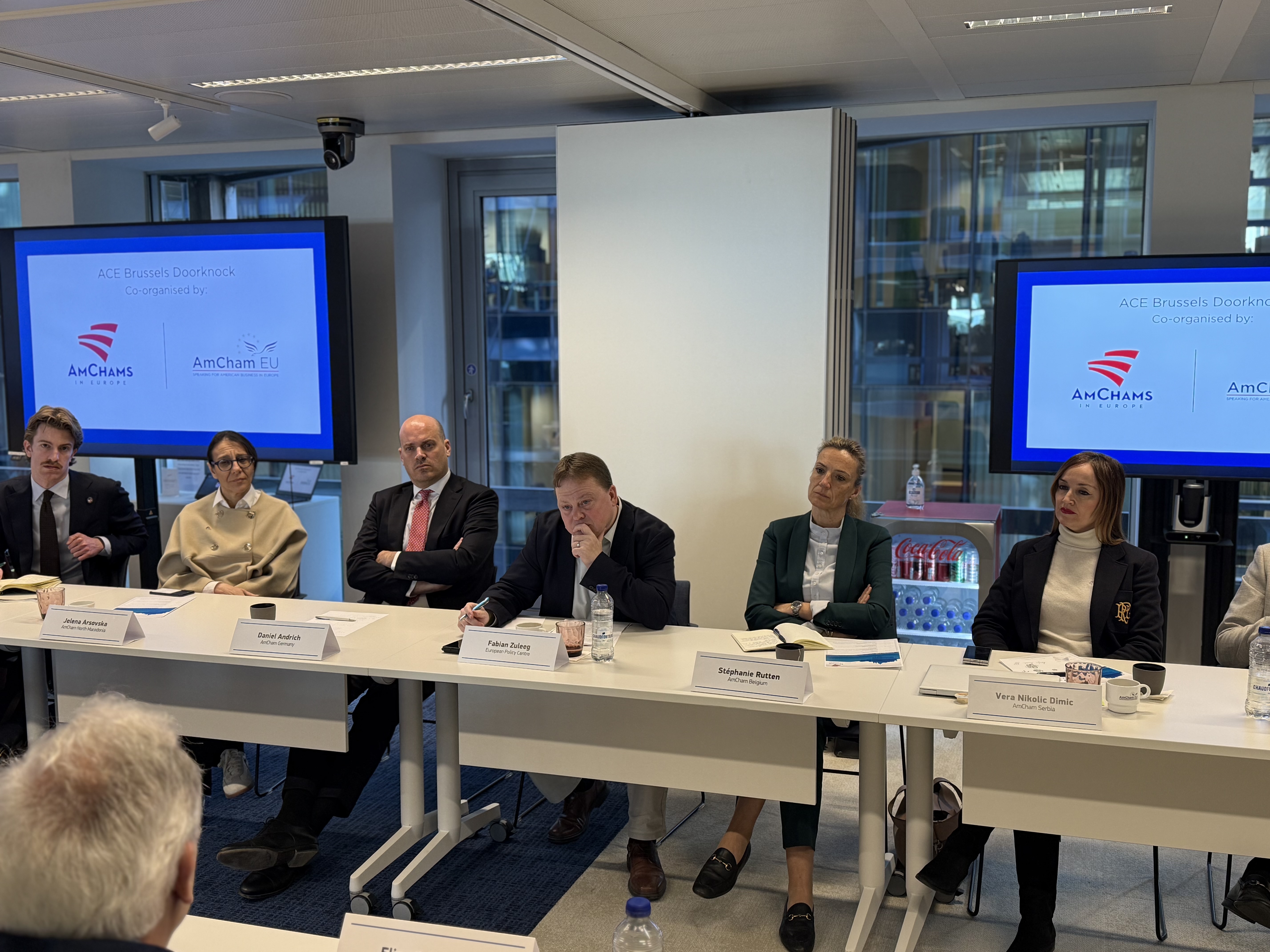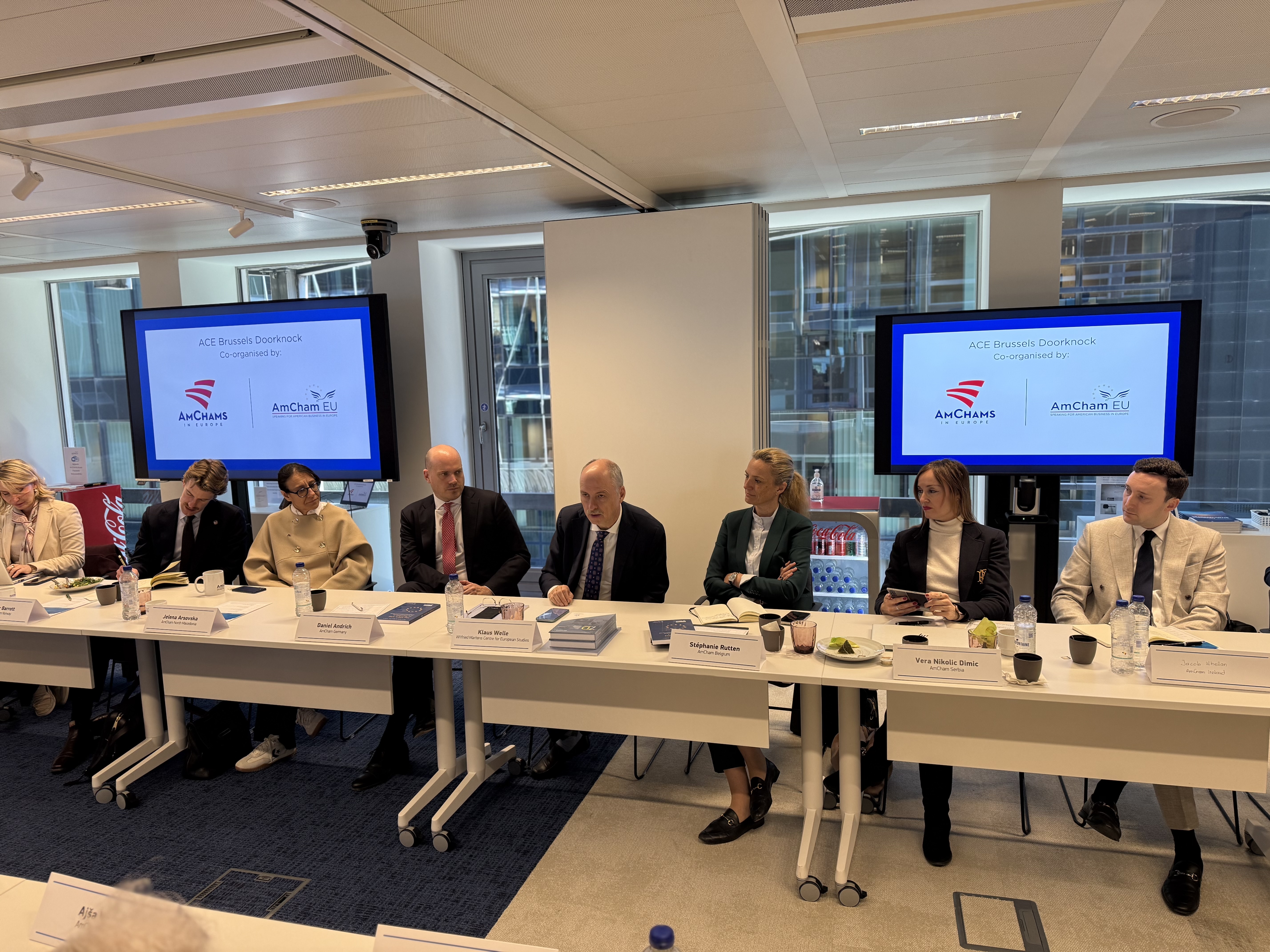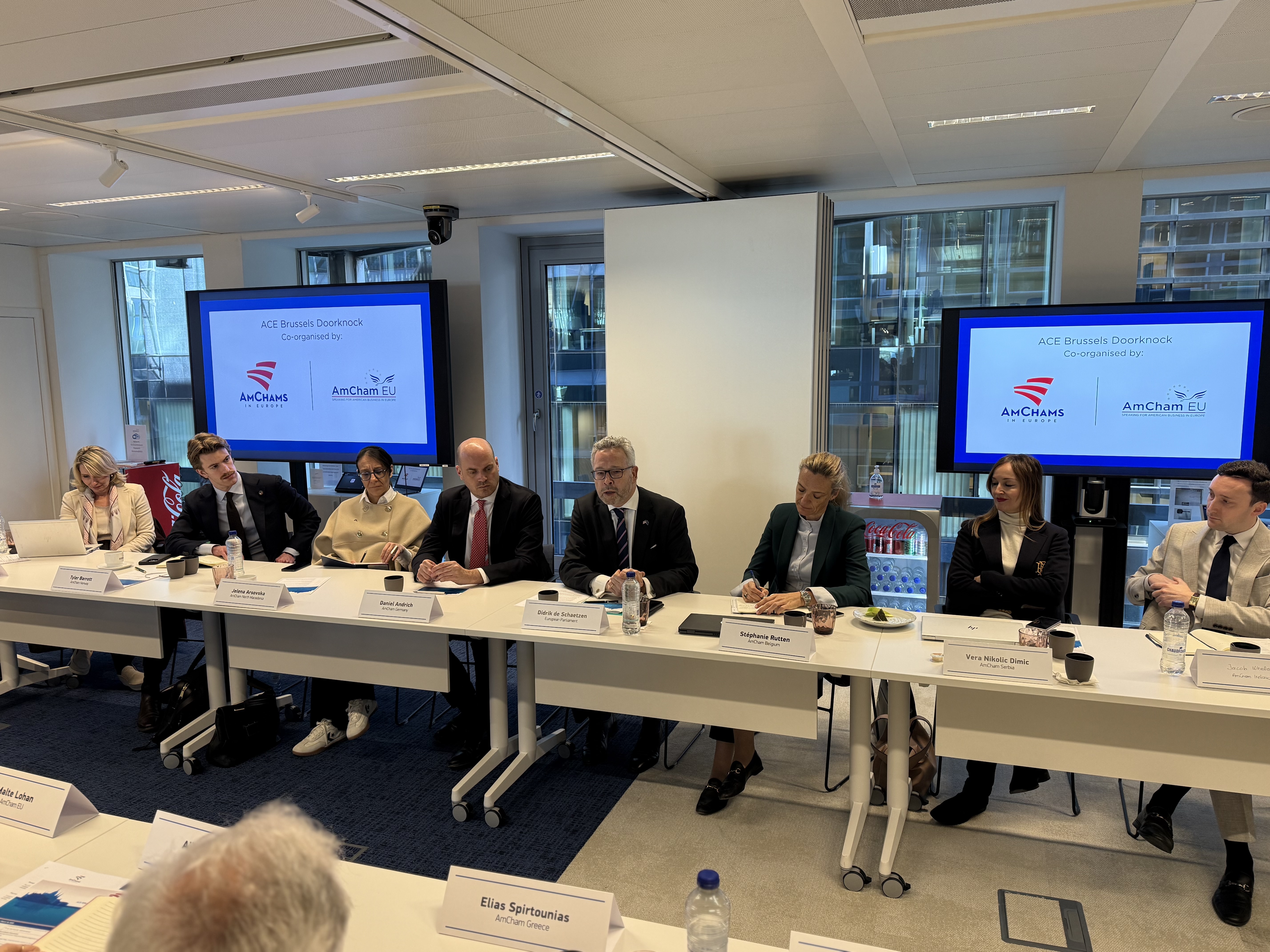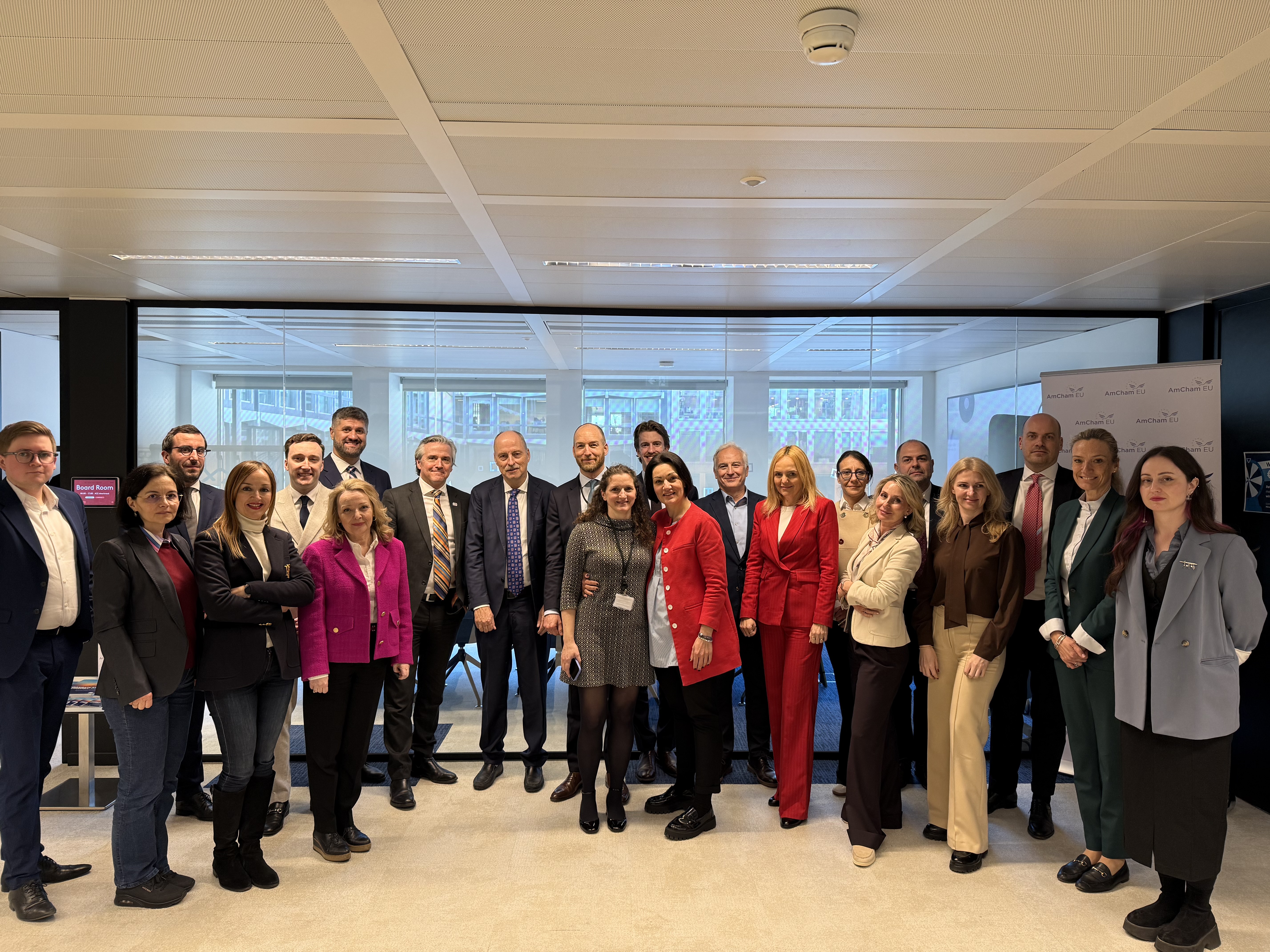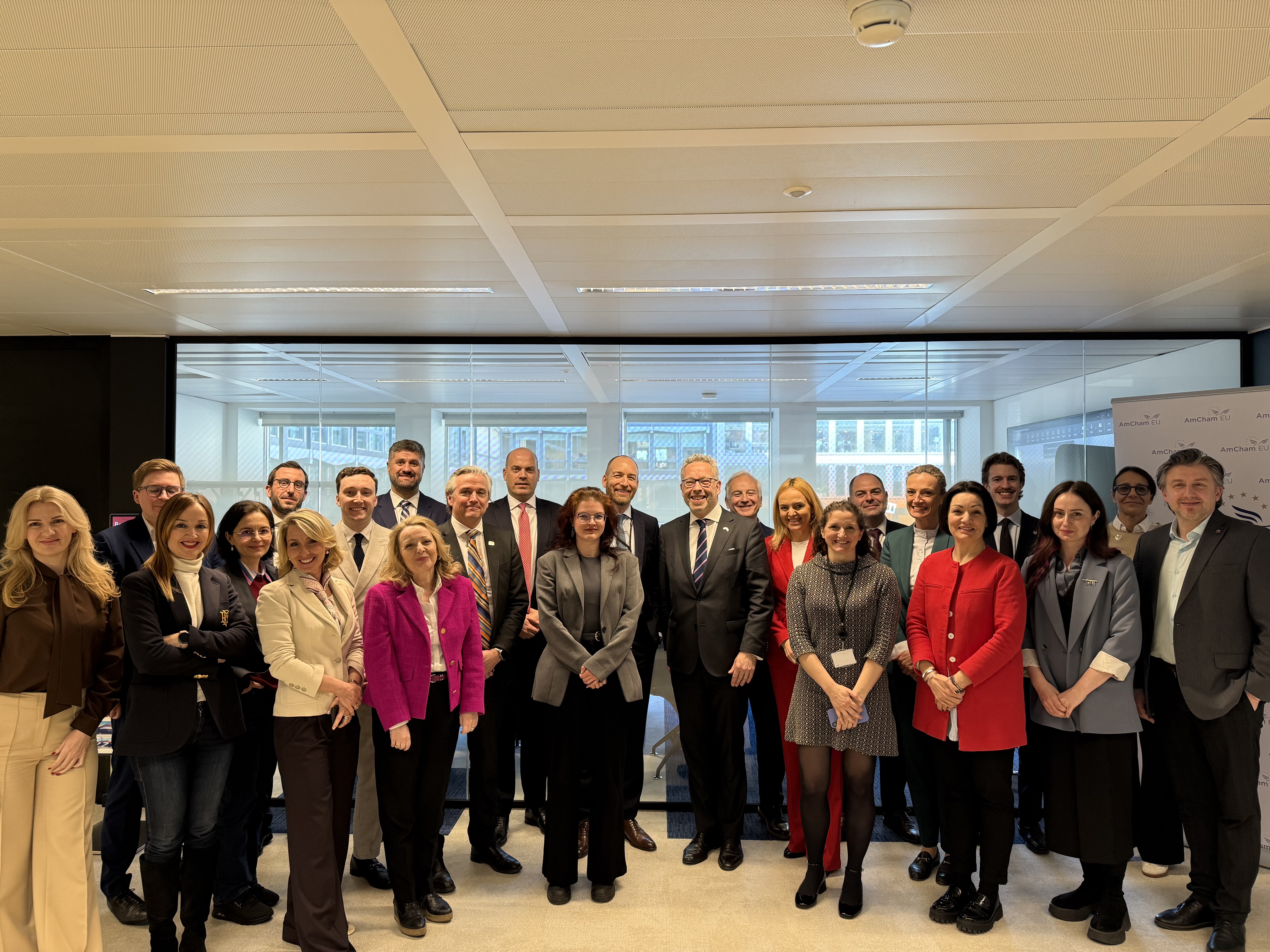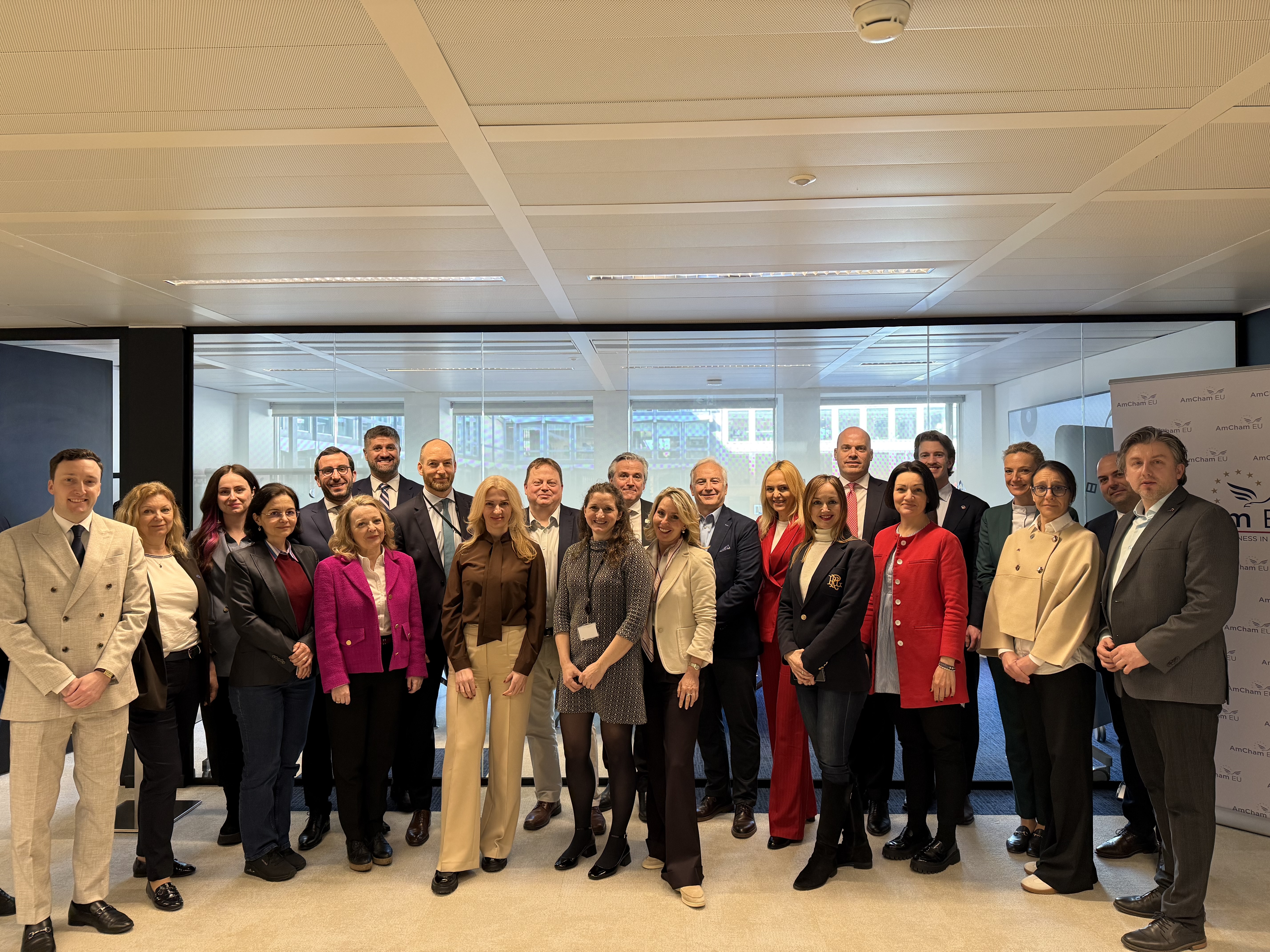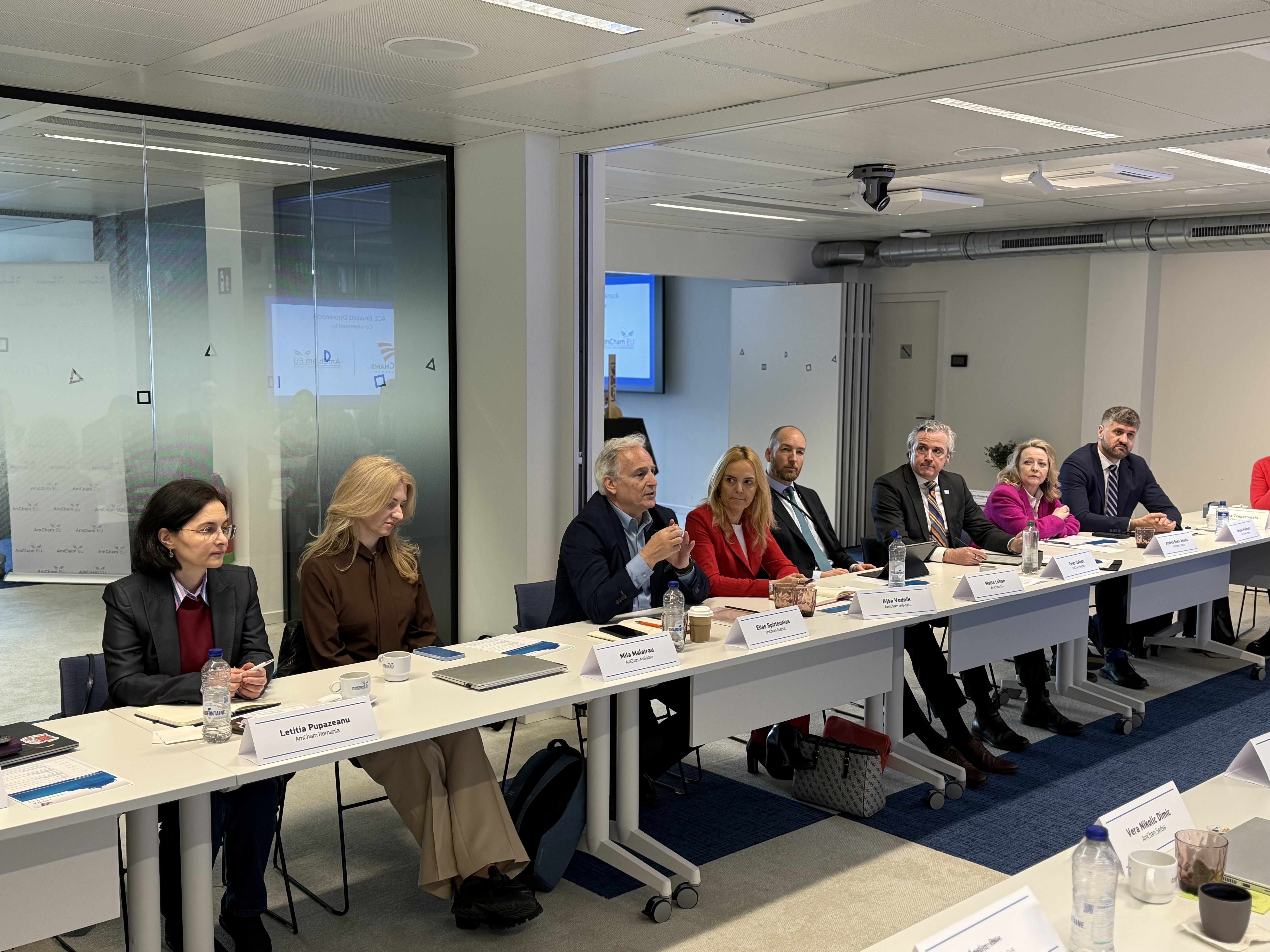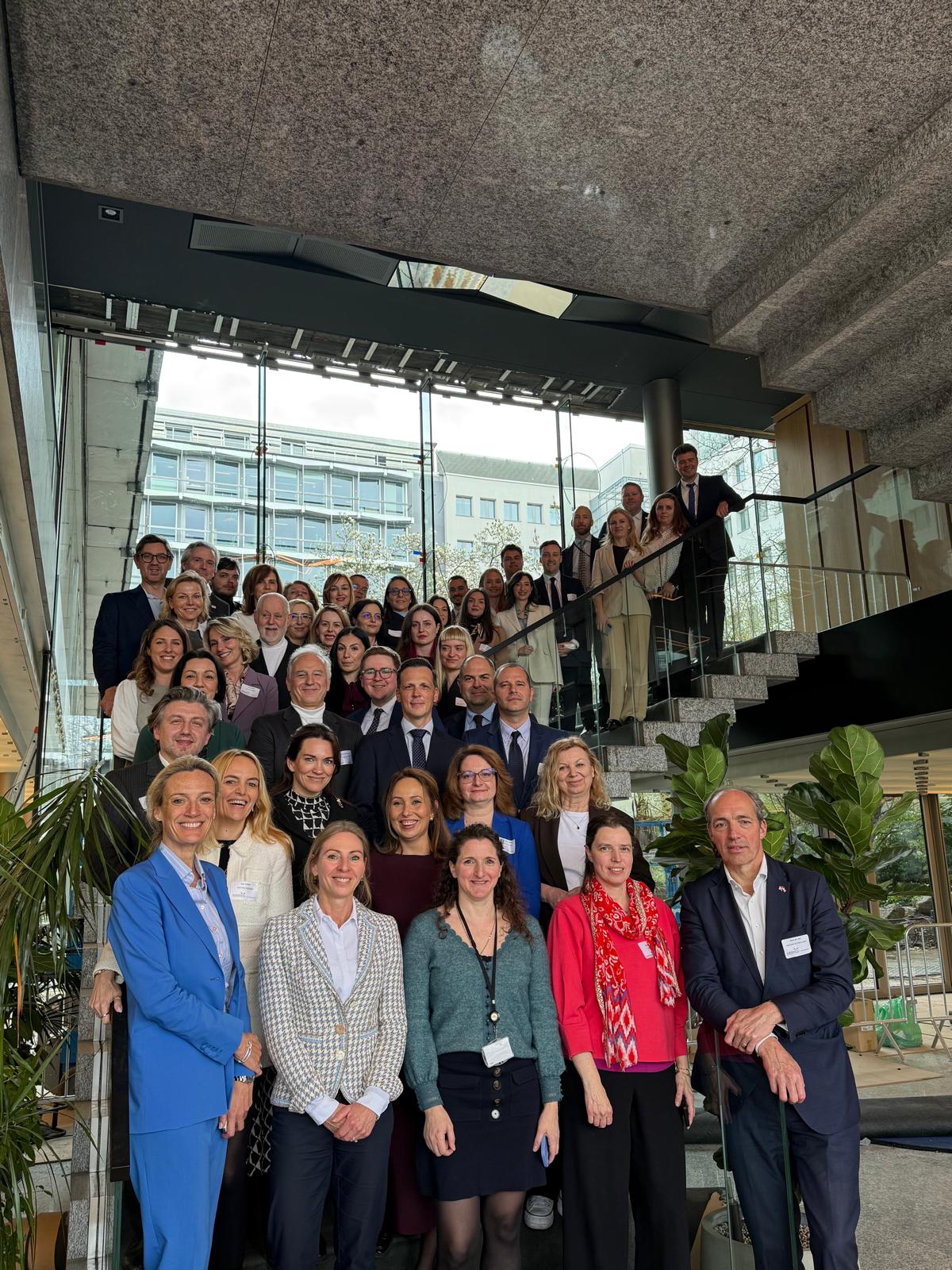

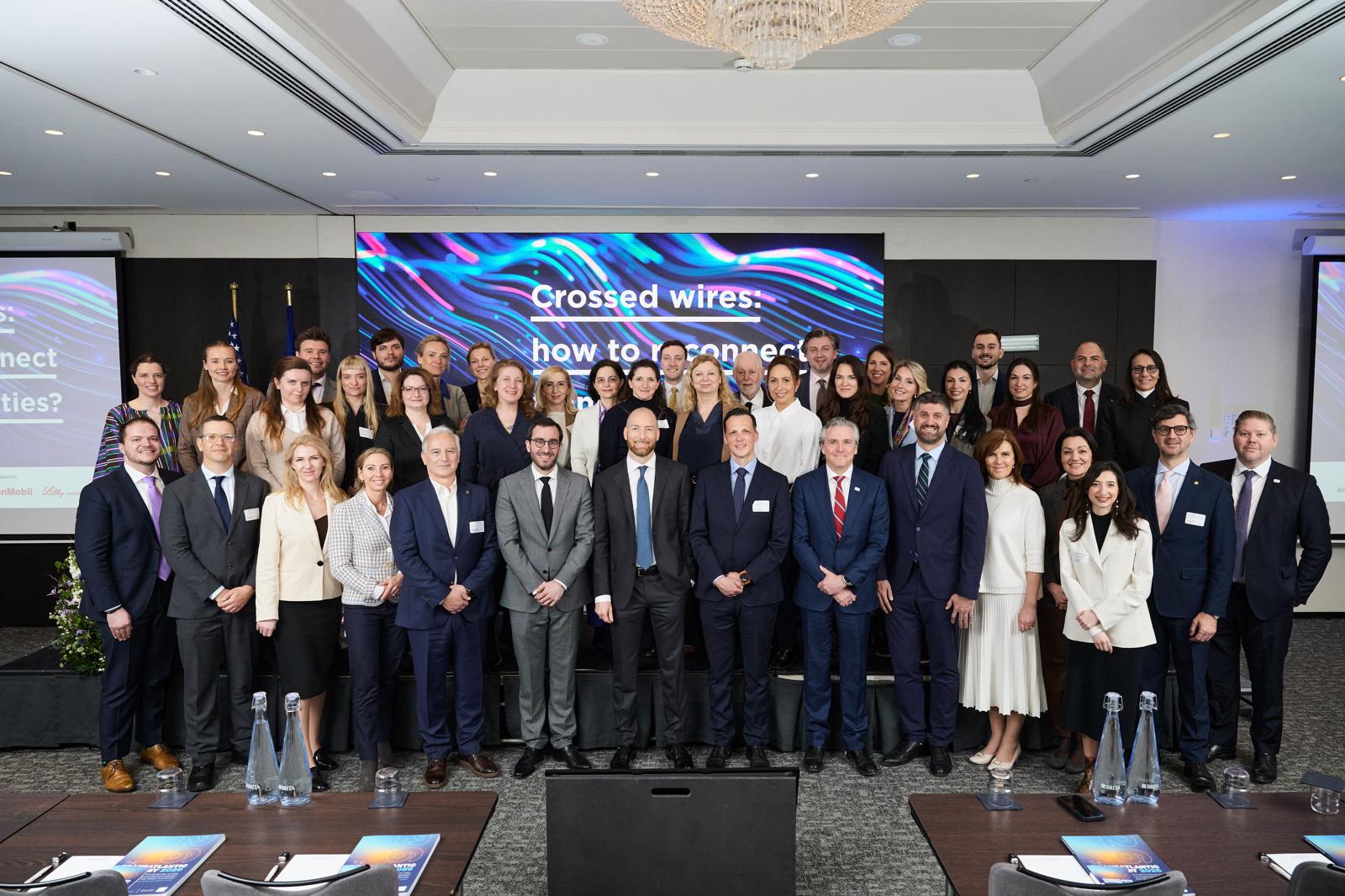
From March 16–18, AmCham Greece participated in the Brussels Briefing and the Transatlantic Conference, organized by AmCham EU and under its mandate of the ACE Secretariat co-organized with AmCham EU the first ACE Brussels Doorknock, bringing together business leaders and policymakers from across Europe to assess the EU–US business outlook for 2026. The group met with Jakob Wegener Friis, Chief Economic Advisor to the President of the European Council; Didrik de Schaetzen, Secretary General, ALDE Party, European Parliament; Klaus Welle, Special Advisor to the Commissioner for Defense and Space and Chairman, Academic Council, Wilfried Martens Centre for European Studies and Fabian Zuleeg, Chief Executive and Chief Economist, European Policy Centre.
Core Message
The transatlantic economy is navigating “stormy seas”—marked by geopolitical tensions, trade frictions, supply chain shifts, rising energy costs, and the disruptive impact of AI. Yet, despite these headwinds, it remains the world’s largest and most consequential economic partnership, requiring renewed trust, coordination, and policy alignment.
Key Insights
Resilience Amid Turbulence
Even in a challenging environment, transatlantic business continues to thrive, with $6.4 billion in daily trade and strong underlying investment ties supporting over 16 million jobs. Goods trade has remained resilient, while services and digital flows continue to expand.
Rising Trade and Policy Frictions
2025 highlighted growing strain, including a sharp rise in U.S. tariffs on EU goods (to 16–18%), underscoring the need to manage trade tensions and avoid further fragmentation. Businesses are calling for simplified, predictable regulatory frameworks.
Diverging but Positive Growth Outlook
Economic growth in 2026 is expected to remain moderately strong but uneven—around 2.5% in the U.S. and ~1.2% in Europe.
Key risks include:
-U.S.: AI-driven transformation and affordability pressures
-Europe: high energy costs, internal market barriers, and external competition (notably from China)
Geopolitical Fragmentation and Strategic Pressures
Companies must navigate a more complex global landscape shaped by security concerns, decarbonization, supply chain realignment, and de-risking globalization, reinforcing the need for closer EU–US coordination.
Competitiveness and Innovation at the Core
Discussions emphasized the importance of industrial policy, digital regulation, and R&D investment, with AI emerging as both a major opportunity and a source of disruption across the transatlantic economy.
Trust, Cooperation, and Execution
Rebuilding trust and maintaining open transatlantic dialogue are critical. Europe faces a pivotal moment: leveraging the Single Market, defending core values, and delivering on policy execution will determine its competitiveness.
Bottom Line
Despite mounting global disruptions, the transatlantic economy remains a dense, deeply integrated, and resilient network of trade, investment, and innovation. Far from being a liability, this interconnectedness is a strategic asset. To sustain it, stakeholders must prioritize openness, stability, and deeper collaboration to navigate uncertainty and unlock future growth.