
What connects a diminutive prehistoric figurine carved from mammoth ivory during the Upper Paleolithic with a towering, stainless steel sculpture in the early 21st century? A striking new exhibition brings Paleolithic and contemporary art into dialogue.
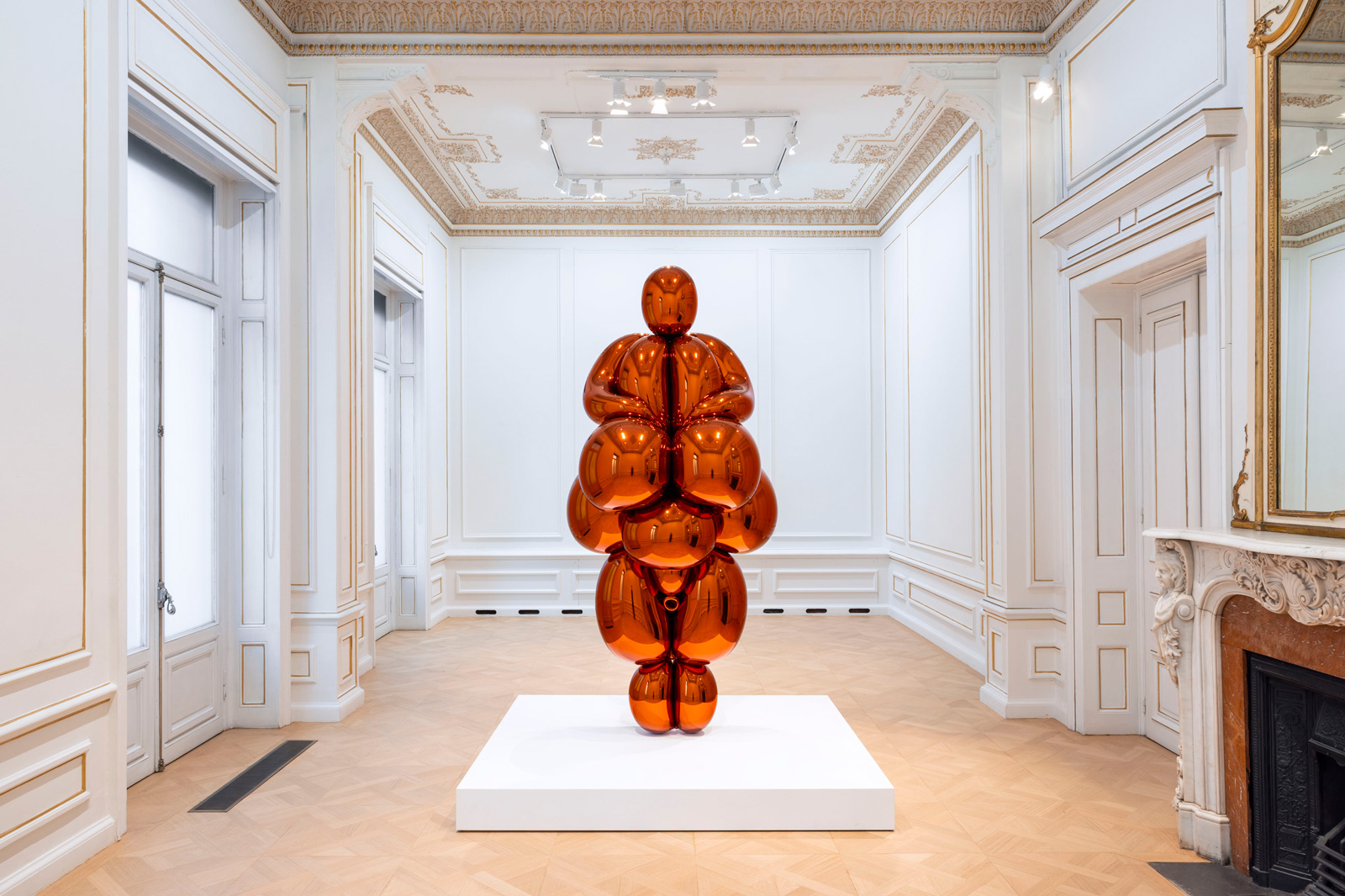
Reflecting on the significance of the Venus figure across time and place, the Museum of Cycladic Art presents Jeff Koons: ‘Venus’ Lespugue, an exhibition that showcases Jeff Koons’s Balloon Venus Lespugue (Orange) (2013-2019) sculpture, on loan from the Homem Sonnabend Collection, in dialogue with certified copies of ten Paleolithic Venus figurines housed in major European museums.
Part of the artist’s Antiquity series, Balloon Venus Lespugue (Orange) draws inspiration from the paleolithic Venus of Lespugue, a mammoth tusk ivory figurine that dates back approximately 28,000 years. Koons has transposed the fetishized original, renowned for its exaggerated curves, into a towering balloon sculpture of mirror‑polished stainless steel.
Rather than suggesting a linear history of art, the exhibition is presented as a dialogue of forms and ideas that transcends the boundaries of time, inviting visitors to reflect on the female form in art over more than 40,000 years of human creativity: How has the symbolic body evolved from the Paleolithic era to postmodernity? Is there a universal archetype of fertility and femininity that transcends epochs? How does material transformation alter or preserve the symbolic meaning?
PREHISTORIC ORIGINS
One of the main forms of European Paleolithic art, Venus figurines are small, stylized figurines usually carved from soft stone (such as limestone and steatite), bone, or ivory or formed from clay. Dating from the Upper Paleolithic period, mainly from approximately 38,000 BCE to 11,000 BCE, and found across Europe and as far as Siberia, these objects represent some of the earliest surviving examples of sculptural representation in human history.
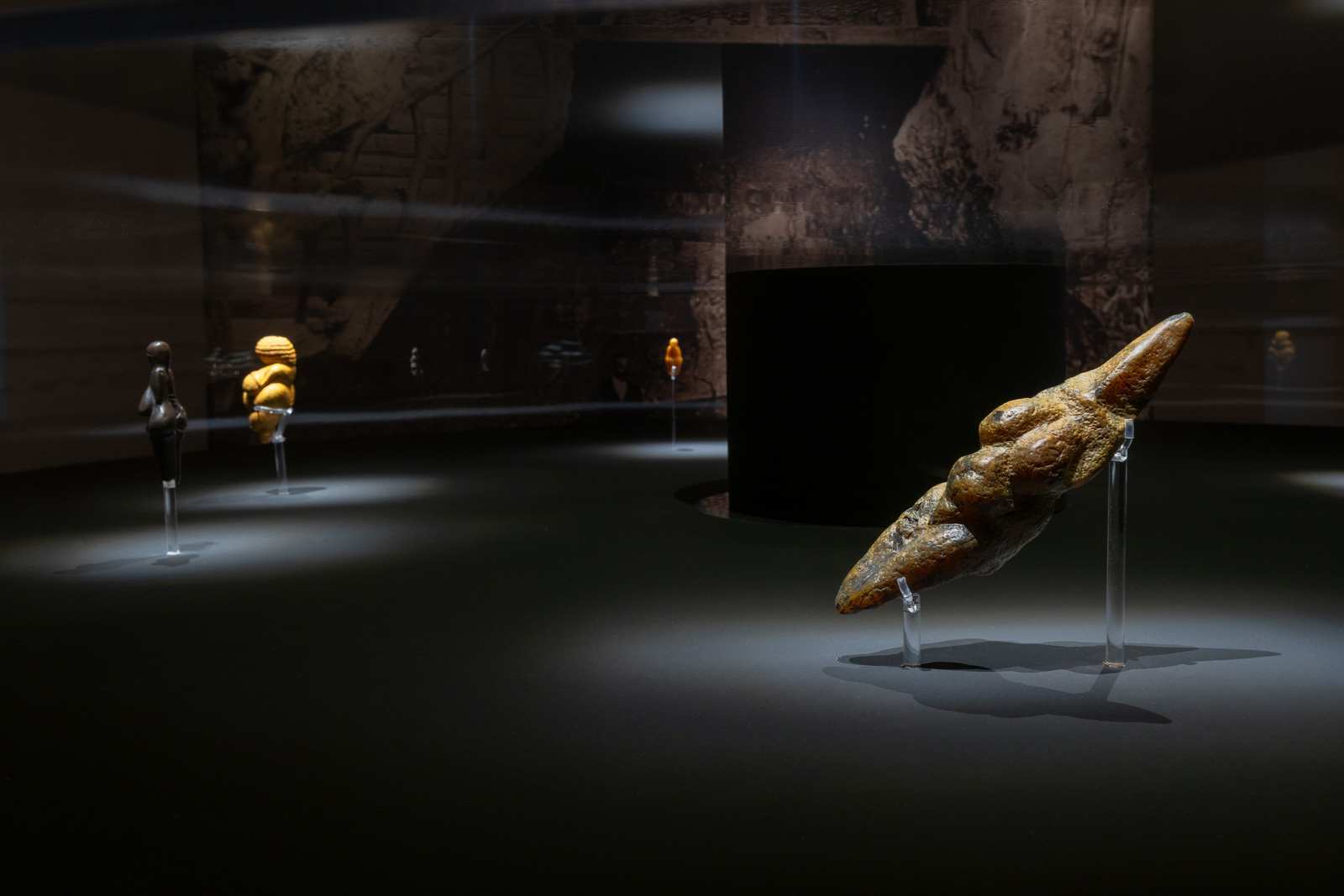
Collaborating with museums in Austria, the Czech Republic, France, and Italy, the Museum of Cycladic Art has brought together certified copies of ten of the most notable Venus figurines, revealing a shared visual vocabulary that appears across great geographical distances. In addition to the Venus of Lespugue, the exhibition features the Venuses of Balzi Rossi (aka Venuses of Grimaldi), the Venuses of Parabita, and the Venus of Savignano, the Venus of Dolní Věstonice, which is one of the earliest known ceramic sculptures in human history, and the iconic Venus of Willendorf, one of the most recognizable examples of prehistoric art.
Despite the considerable distances separating their places of discovery, these figurines share notable characteristics, namely their small size, pronounced emphasis on parts of the female body associated with sexuality and fertility, and a striking degree of abstraction in the rendering of the face and limbs.
CONTEMPORARY REINTERPRETATION
With Venus figurines in the exhibition representing one of humanity’s earliest aesthetic codes, Koons’s Balloon Venus Lespugue (Orange) revisits this prehistoric visual language through the radically different context of the industrial, hyper-material world of the 21st century, translating the small Paleolithic figure into a monumental sculptural presence made of reflective stainless steel. The sculpture’s polished surface mirrors the surrounding space and the viewer, turning the act of seeing into an active participatory experience that invites visitors to explore how material transformation alters or preserves symbolic meaning, and how contemporary art might help us reconnect to ancient aspects of human experience.
The exhibition also includes original sketches by Jeff Koons for the creation of the Koons’s Balloon Venus Lespugue series, as well as a short video produced by the Museum of Cycladic Art in which the artist discusses his work, and it is accompanied by a bilingual catalogue featuring essays by Koons and leading international researchers on Paleolithic figurines and their enduring relevance in the history of art.
WHEN AND WHERE
Jeff Koons: ‘Venus’ Lespugue
through August 31, 2026
Museum of Cycladic Art
Stathatos Mansion
1 Irodotou Street and Vas. Sofias Avenue, Athens 10674
T: +30 210 722 8321-3
For tickets and opening hours, see cycladic.gr